By Jim McKinnon | Dream Big In Mexico Real Estate
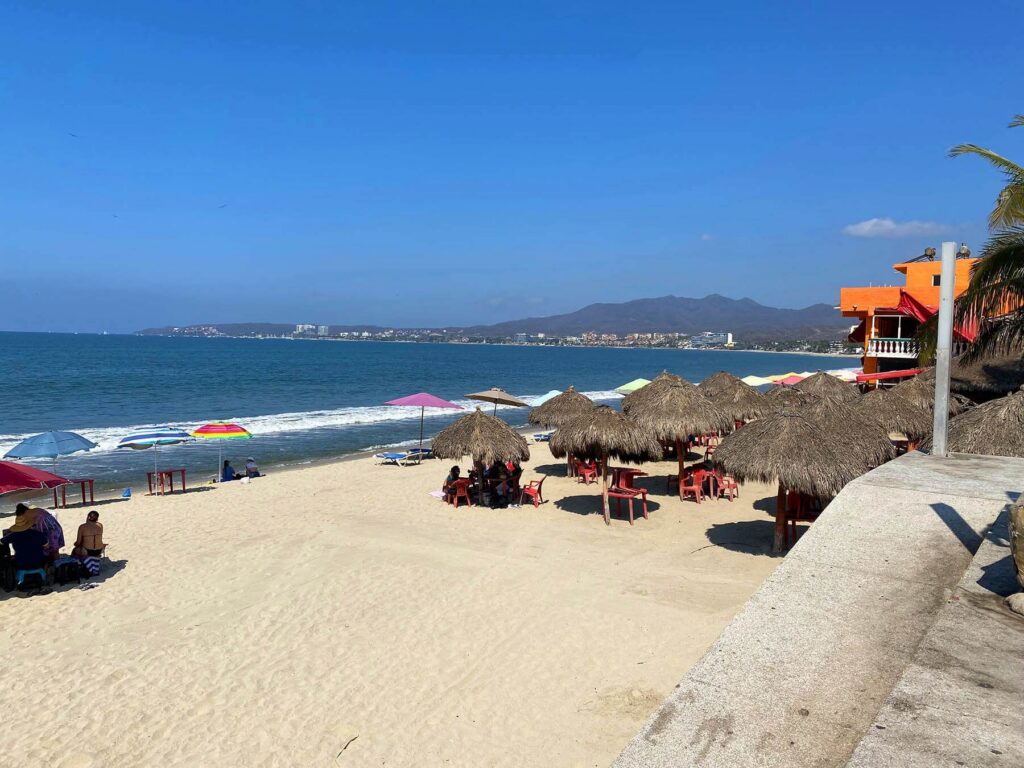
Can Canadians and other foreign buyers own property in Mexico? This is one of the first questions I hear from Canadians considering a move to Mexico. The answer is yes. Canadians can legally buy real estate in Mexico, including in Bucerías and throughout the Riviera Nayarit.
Canadians can legally buy real estate in Mexico, including condos, houses and other residential property in popular coastal communities such as Bucerías, Nuevo Nayarit, La Cruz de Huanacaxtle, Puerto Vallarta, Punta de Mita and Sayulita.
The longer answer—and the one I think is much more important—is that buying property in Mexico is not the same as buying property in Canada. That’s where some of the confusion, and occasionally some unnecessary anxiety, begins.
Before moving to Mexico, I owned and operated a successful real estate brokerage in Canada. I understood real estate. I understood contracts, negotiations, agents, closings and the importance of protecting a client’s interests. Then I came to Mexico and discovered something important:
Knowing Canadian real estate doesn’t mean you automatically understand Mexican real estate.
The terminology is different, the closing process is different, and the role of the notario is different. Property ownership for foreigners near the coast is structured differently, and even the way a transaction progresses from an accepted offer to getting the keys can feel unfamiliar to a Canadian buyer.
None of that means Canadians should be afraid of buying property here. It simply means they should understand the system they’re buying into.
That’s the purpose of this guide. I want to explain how Canadians can buy property in Mexico, how a fideicomiso works, what happens during a typical purchase, what buyers should investigate before making an offer, and some of the differences I’ve noticed between buying real estate in Canada and buying real estate in Bucerías.
That’s the purpose of this guide. I want to explain how Canadians can buy property in Mexico, how a fideicomiso works, what happens during a typical purchase, what buyers should investigate before making an offer, and some of the differences I’ve noticed between buying real estate in Canada and buying real estate in Bucerías.
Can Canadians Buy Property in Mexico?
There is a persistent misconception in Canada that foreigners cannot own property in Mexico. That isn’t correct.
Mexico does place special restrictions on direct foreign ownership of property within what is known as the Restricted Zone. Under Article 27 of the Mexican Constitution, this zone extends 100 kilometres from Mexico’s international borders and 50 kilometres inland from its coastline.
Because Bucerías and the communities surrounding Banderas Bay are within 50 kilometres of the Pacific coast, they fall within this Restricted Zone. For a Canadian purchasing residential property here, ownership rights are therefore generally established through a Mexican bank trust known as a fideicomiso.
That word can sound intimidating the first time you hear it. In practice, the basic concept is much easier to understand.
What Is a Fideicomiso?
A Mexican fideicomiso is a bank trust that allows a foreign buyer to acquire the rights to use and enjoy residential property located within Mexico’s Restricted Zone. A Mexican banking institution acts as the trustee, while you—the purchaser—are named as the beneficiary of the trust.
Mexico’s Ministry of Foreign Affairs, the Secretaría de Relaciones Exteriores or SRE, describes this structure as allowing foreign individuals or entities to use and enjoy real estate within the Restricted Zone through a fideicomiso. The authorization can be granted for a period of up to 50 years, and the trust agreement is formalized through a public deed.
The important thing for a Canadian buyer to understand is that having a bank involved doesn’t mean the bank gets to treat your condo or house as though it were the bank’s personal property. As beneficiary, you have extensive rights over the property under the trust structure.
Subject to the terms of the trust and Mexican law, you can generally occupy the property, sell or transfer your beneficial rights, rent the property subject to applicable laws and tax requirements, improve or renovate it subject to applicable rules and permits, designate substitute beneficiaries, and benefit financially from the property.
When I explain a fideicomiso to Canadian clients, I usually tell them not to get hung up on the fact that the structure is different from what they’re accustomed to in Canada.
Different doesn’t automatically mean less secure.
The more useful questions are: What legal rights does the structure give me? How are those rights protected? What obligations come with the trust? Those are the things your legal and closing professionals should help you understand before completing the purchase.
For anyone who wants to understand the subject in more detail before starting a property search, I’ve also put together an explanation of how a fideicomiso works in Mexico.
Why Does Mexico Use a Fideicomiso?
The Restricted Zone isn’t a rule specifically targeting Canadians or Americans. It comes from Mexico’s constitutional framework regarding foreign ownership of land near the country’s borders and coastlines.
Rather than simply preventing foreigners from acquiring residential property in those areas, Mexican law provides the fideicomiso mechanism. The system has consequently become a normal part of foreign residential property ownership in coastal Mexican markets.
For someone considering Bucerías real estate, that means the existence of a fideicomiso shouldn’t automatically be viewed as a warning sign. It’s part of the legal framework commonly used by foreign buyers here.
What matters is that the trust, title and transaction are properly established and reviewed.
Our Own Move to Bucerías Wasn’t Originally About Real Estate
My perspective on Mexico is probably a little different from someone who simply decided they wanted to sell real estate somewhere warm.
My wife Angela and I didn’t move to Bucerías because I was looking for another real estate market. We came here because life forced us to reconsider what was important.
After I had spent years owning and operating a successful real estate brokerage in Canada, Angela’s health deteriorated significantly. She was dealing with long COVID as well as fibromyalgia and thyroid-related health issues. There were periods when she couldn’t get out of bed for as long as two weeks at a time.
Eventually, you stop looking at something like that as a temporary inconvenience and start asking bigger questions about the life you’re living. For us, one of those questions was whether we needed to make a significant lifestyle change and find a better climate.
That journey eventually brought us to Bucerías.
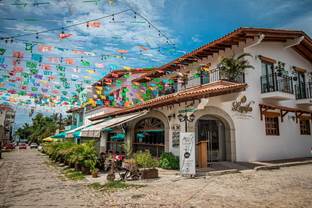
Over time, Bucerías stopped being somewhere we came to escape Canadian winters and became home. That experience is one reason I understand the Canadian buyers who come down here and start imagining a different life for themselves.
Sometimes they’re retiring. Sometimes they’re approaching retirement and want to spend four or five months here every winter. Some want an investment property or vacation condo. Others simply walk along the beach one evening, look at each other and ask, “Why don’t we live here?”
I understand that conversation because Angela and I had our own version of it.
At the same time, I’m still a real estate broker. When the emotion of finding a beautiful condo with an ocean view takes over, my professional instinct is to start asking questions about the property, the building, the documentation and the transaction.
That’s the balance I try to bring to buyers:
Enjoy the dream. But do your homework.
Is Buying Property in Mexico Safe for Canadians?
This is probably the bigger question hiding behind “Can Canadians buy property in Mexico?” What people are often really asking is whether they can safely put several hundred thousand dollars into property in another country.
That’s a completely reasonable concern.
My answer is that Mexican real estate can be purchased safely, but I would never tell someone to simply assume that every property and every transaction is safe. There is an important distinction.
The goal isn’t to trust the entire market blindly. The goal is to structure your particular purchase properly.
That means verifying the property, understanding its legal status, reviewing the relevant documentation, using appropriate professionals and making sure you understand what you’re signing.
A beautiful kitchen, rooftop pool and five-minute walk to the beach don’t replace due diligence.
If you’re at the beginning of this process, understanding the steps to buying property in Mexico before falling in love with a particular listing can prevent a lot of unnecessary anxiety later.
Mexico Doesn’t Work Exactly Like Canadian Real Estate
Canadian buyers sometimes arrive with assumptions based on how a purchase would happen in Alberta, British Columbia, Ontario or another Canadian province. That’s understandable, but it can create problems.
One of the most important pieces of advice I can give anyone looking at Bucerías homes and condos for sale is not to assume that because something happens a certain way in Canada, it happens the same way in Mexico.
There are similarities, of course. There is a buyer and seller, an offer and negotiation, due diligence and ultimately a closing. However, the legal and administrative infrastructure behind those steps can be considerably different.
That’s why I think a good buyer’s agent in Mexico should do much more than unlock doors.
Showing property is the easy part. The real value begins when a buyer turns to me and says:
“Jim, we really like this one. What happens next?”
The Role of the Notario Público
One of the biggest differences Canadians encounter is the Mexican Notario Público.
Despite the similar name, a Mexican Notario Público is not equivalent to what most Canadians think of as a notary public. A Notario Público in Mexico is a highly qualified legal professional appointed under the applicable state system and plays a central role in real estate transfers.
Among other responsibilities in a typical transaction, the notario’s office is involved in formalizing the transfer, reviewing documentation, calculating or coordinating certain taxes and government requirements, and ensuring the transaction is appropriately formalized and registered. The precise responsibilities will depend upon the property and transaction.
The key point for a Canadian buyer is that the notario is an essential part of the transaction, but that doesn’t mean you should stop asking questions or assume that every other form of professional representation is unnecessary.
Different professionals have different roles. Your real estate agent, closing coordinator, lawyer where appropriate, bank trustee and notario may all be involved in different parts of the transaction. Understanding who is responsible for what is important.
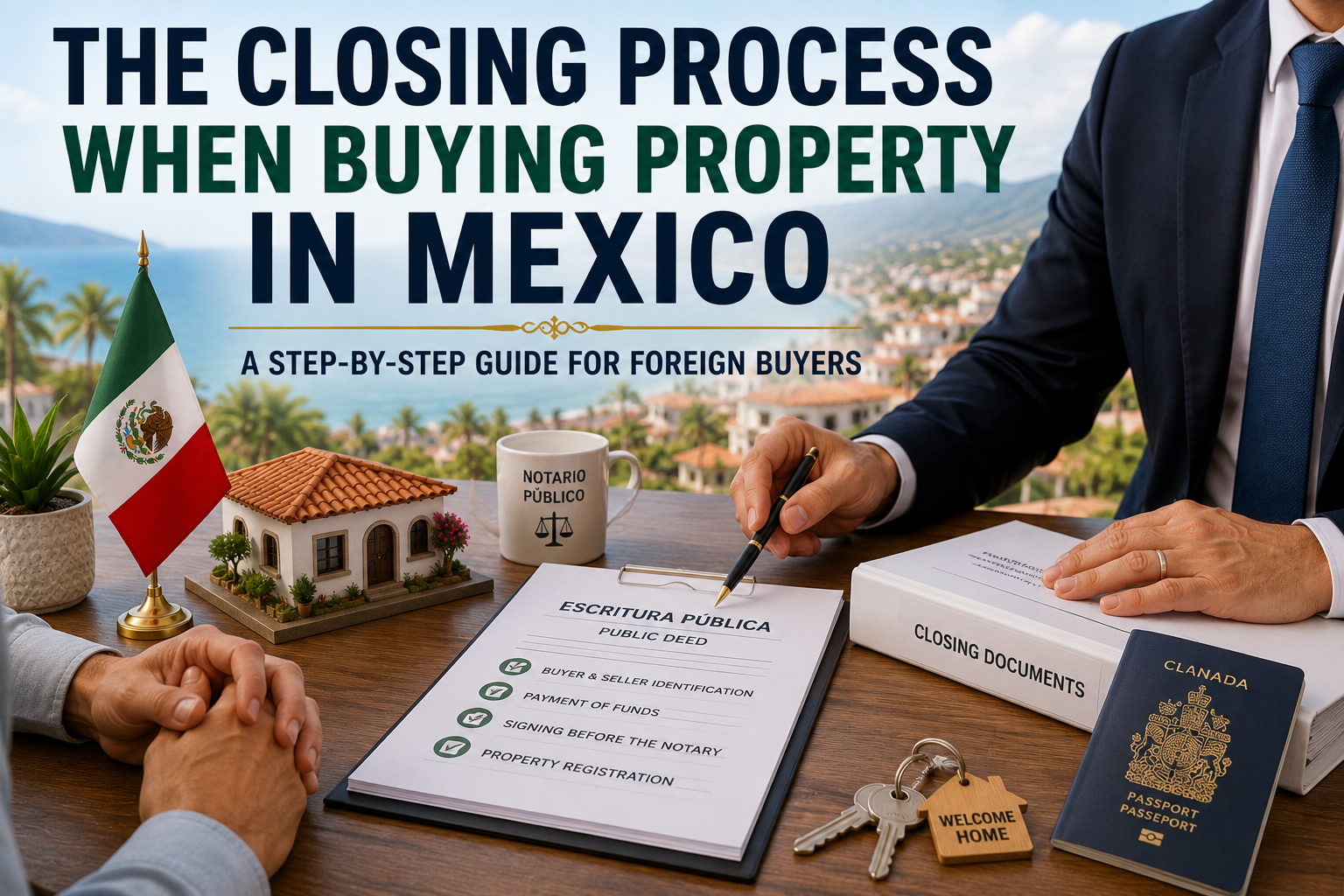
A detailed explanation of the Mexico real estate closing process is worth reading before making an offer because closing here can look considerably different from the Canadian process.
What Should Be Verified Before Buying Property in Bucerías?
This is where buying property becomes much more property-specific. There is no substitute for reviewing the actual documentation associated with the condo or house you’re considering.
Depending upon the property and transaction, appropriate professionals may investigate a number of important areas.
Ownership and Title
Does the seller have the legal ability to transfer the property or the applicable trust rights? This sounds obvious, but confirming ownership and the seller’s ability to complete the transaction is fundamental.
The Escritura
The escritura pública—the public deed—is one of the most important documents associated with Mexican real estate. The names, property description, measurements and legal information need to correspond with the property being sold.
For buyers who want a deeper explanation of this document, what is an escritura in Mexican real estate? is worth understanding before you reach the closing stage.
Liens and Encumbrances
Appropriate searches and certifications should be obtained to identify registered liens, encumbrances or other issues affecting the property.
Property Taxes
The status of municipal property taxes, commonly called predial, should be addressed as part of the transaction. I’ve covered this separately in property taxes in Bucerías: what buyers should know.
Water and Utilities
Depending upon the property and municipality, outstanding accounts and relevant documentation may also need to be reviewed.
Condominium Status
If you’re buying a condo, the condominium regime and applicable documentation matter. You aren’t simply buying the interior of a unit; you’re acquiring rights and obligations within a larger condominium structure.
HOA Fees and Obligations
You need to know what you’re expected to pay, what those fees cover and whether the seller has outstanding condominium obligations. If you’re unfamiliar with the system, how HOA fees work in Bucerías condos provides some useful background.
Condominium Bylaws
Can you have pets? Can you rent the unit? Are short-term rentals restricted? Are there rules governing renovations, parking, common areas or rooftop facilities?
Those aren’t minor details if they’re important to the reason you’re purchasing. If your dream is to bring two dogs down from Canada and the condominium doesn’t permit them, the fact that the condo has an amazing ocean view isn’t going to make you feel better.
The broader subject of condo bylaws and why they matter in Mexico is something I encourage condominium buyers to understand before making a commitment.
Buying a Condo in Bucerías: Look Beyond the Unit
This deserves special attention because condominiums make up a significant part of the coastal real estate market.
When people search online for condos for sale in Bucerías, they naturally focus on the individual unit. How many bedrooms and bathrooms does it have? How large is the terrace? Is there an ocean view? Does it have parking? How far is it from the beach?
Those things matter, but you’re not only buying the interior of a condominium. You’re buying into a community and a shared financial structure.
I want buyers to understand the building too. What are the monthly condominium fees and what do they include? How well maintained are the common areas? How old are major building components? Is there a reserve fund? Have there been special assessments? Are any significant repairs anticipated? How is the condominium administered, and what do the bylaws say?
A condo with a lower purchase price isn’t necessarily a better value if the building is poorly managed or facing substantial future expenses. Likewise, a building with somewhat higher HOA fees isn’t necessarily expensive if those fees support good maintenance, appropriate reserves and valuable amenities.
Context matters.
Anyone seriously considering condominium ownership here should understand what to look for when buying a condo in Bucerías before deciding that the prettiest unit is automatically the best choice.
This deserves special attention because condominiums make up a significant part of the coastal real estate market.
When people search online for condos for sale in Bucerías, they naturally focus on the individual unit. How many bedrooms and bathrooms does it have? How large is the terrace? Is there an ocean view? Does it have parking? How far is it from the beach?
Those things matter, but you’re not only buying the interior of a condominium. You’re buying into a community and a shared financial structure.
I want buyers to understand the building too. What are the monthly condominium fees and what do they include? How well maintained are the common areas? How old are major building components? Is there a reserve fund? Have there been special assessments? Are any significant repairs anticipated? How is the condominium administered, and what do the bylaws say?
A condo with a lower purchase price isn’t necessarily a better value if the building is poorly managed or facing substantial future expenses. Likewise, a building with somewhat higher HOA fees isn’t necessarily expensive if those fees support good maintenance, appropriate reserves and valuable amenities.
Context matters.
Anyone seriously considering condominium ownership here should understand what to look for when buying a condo in Bucerías before deciding that the prettiest unit is automatically the best choice.
Should Canadians Buy New Construction or Resale Property?
Both can make sense. They simply involve different considerations.
Resale Property
With a resale property, you can usually see exactly what you’re buying. You can walk through the condo, inspect the building and common areas, hear the neighbourhood and see the actual view from the terrace rather than imagining it from an architectural rendering.
Depending upon the transaction, possession may also occur much sooner. Buyers who prefer this approach can explore resale homes and condos in Bucerías to get a sense of what’s available in established buildings and neighbourhoods.
Pre-Construction
Pre-construction can offer advantages too. You may have access to an earlier stage of a desirable development, newer construction, contemporary designs and potentially different payment structures.
However, you’re also buying something that may not yet exist in its finished form. That makes investigation of the developer, project documentation, contractual terms, construction status, delivery provisions and other details particularly important.
Buyers considering this route should spend some time understanding pre-construction real estate in Mexico and the additional questions that should be asked before signing a contract.
I don’t think the right question is whether pre-construction is better than resale. The better question is:
Which option fits this particular buyer’s goals and risk tolerance?
How Much Does It Cost to Buy Property in Mexico?
Canadian buyers need to budget beyond the advertised purchase price. Closing costs vary according to the transaction, property value, trust requirements and other factors.
Potential expenses can include notario services, acquisition taxes, registration, certificates and government documentation, fideicomiso establishment or transfer, bank trustee fees, permits, legal or closing services where applicable, and other transaction-specific expenses.
Because these amounts vary, I don’t like giving a buyer a universal percentage and pretending it will apply perfectly to every transaction.
Before you remove conditions or commit yourself to a purchase, you should have a reasonable understanding of the anticipated closing costs for that particular property.
There is also an ongoing cost associated with maintaining a fideicomiso through the trustee bank. Again, get the actual figures applicable to your proposed transaction rather than relying on something someone posted online five years ago.
I’ve written separately about closing costs when buying property in Mexico because this is one of the areas where Canadians can underestimate their total purchase budget if they focus exclusively on the listing price.
Do You Need Mexican Residency to Buy Property?
Generally, being a Mexican citizen or permanent resident is not a prerequisite simply to purchase residential real estate. Foreigners can acquire property rights through the appropriate legal structure.
However, residency, immigration status, tax residency and property ownership are separate subjects. Owning a condo in Bucerías does not automatically answer questions about how long you’re permitted to remain in Mexico, where you’re considered tax resident or what tax obligations may apply to income generated from the property.
Those questions should be considered separately with appropriate immigration and tax professionals. For people contemplating a more permanent move, understanding the difference between buying property and becoming a resident of Mexico is important.
Can Canadians Rent Out Their Property in Mexico?
Potentially, yes, but don’t confuse “I own a condo” with “I can rent it however I want without any additional considerations.”
You need to consider Mexican tax requirements, applicable federal, state and municipal requirements, condominium rules, administration and property-management requirements, and the economics of the particular property.
If rental income is an important part of your purchase decision, investigate those issues before buying, not afterward.
I also encourage buyers to be realistic about rental projections. Statements such as “this condo will pay for itself” should be supported by evidence, not enthusiasm.
Look at likely occupancy and comparable rental rates. Consider management costs, utilities, maintenance, HOA fees, taxes and periods when the property may sit vacant. A property can be a great purchase without needing an exaggerated rental-income story attached to it.
If income potential is one of your priorities, it makes sense to understand renting out your property in Mexico or can you rent out a condo in Bucerías? before choosing a particular development.
Where Should Canadians Buy Around Banderas Bay?
There isn’t one correct answer.
One of the reasons I enjoy working with buyers in this area is that the communities surrounding Banderas Bay have genuinely different personalities. The right location depends much more on how you want to live than on which community somebody tells you is “best.”
I’m biased because Bucerías is home, but there’s a reason it attracts so many Canadian buyers.
It combines a traditional Mexican town with a substantial international community, a long beach, restaurants, cafés, shops and services. Depending upon where you buy, the lifestyle can also be remarkably walkable.
The Bucerías Golden Zone is particularly popular with buyers who want to be close to restaurants and the beach without depending on a vehicle for everything. You’ll find everything from older Mexican homes and established condo buildings to modern developments and luxury properties.
For many Canadians looking at Bucerías real estate, the appeal is that the community feels established. People actually live here. It isn’t simply a resort development that empties out when vacation season ends.
If Bucerías is already on your shortlist, spend some time exploring the Bucerías community page and the different areas of town. You may also find what is the Bucerías Golden Zone? and the best neighbourhoods in Bucerías for Canadian buyers helpful before deciding where to focus your search.
Formerly widely known as Nuevo Vallarta, Nuevo Nayarit real estate offers a different environment. You’ll find gated communities, newer developments, condos, houses, golf-oriented communities, canals and extensive resort infrastructure.
Buyers who prioritize newer construction, security, planned communities or larger homes may find Nuevo Nayarit particularly attractive.
North of Bucerías, La Cruz de Huanacaxtle real estate has become increasingly popular with buyers who want a smaller community and enjoy its marina, restaurants and local atmosphere.
It’s worth exploring rather than assuming Bucerías is automatically your answer.
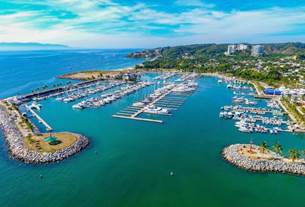
Puerto Vallarta real estate offers a much more urban environment with extensive dining, nightlife, shopping, culture and a large range of properties.
For some people, that’s exactly what they want. Others visit Puerto Vallarta and realize they prefer living somewhere smaller.
Neither decision is wrong.
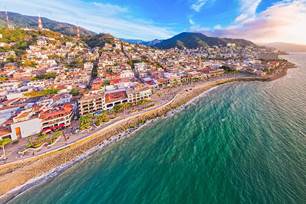
Farther north, these communities offer yet another lifestyle. Sayulita real estate attracts buyers drawn to an internationally known surfing community and energetic atmosphere, while San Pancho real estate offers its own distinctive feel.
Again, spend time in these places.
Real estate decisions should start with lifestyle before they start with granite countertops.
For buyers who aren’t sure where to begin, Bucerías vs Nuevo Nayarit vs Puerto Vallarta: where should you buy? can be much more useful than immediately scrolling through hundreds of listings.
Other comparisons worth reading include Bucerías vs La Cruz, Bucerías vs Sayulita and Bucerías vs Nuevo Nayarit for retirement.
Don’t Start With the Property Search
This might sound strange coming from a real estate agent, but if you’re thinking about moving to this part of Mexico, I don’t think your first question should be, “Which condos are for sale?”
Your first question should be:
“Where would I actually enjoy living?”
A spectacular condo in the wrong community is still the wrong property.
Before narrowing the search, think about your real life. Do you want to walk to restaurants? Do you want nightlife or quiet evenings? Will you have a vehicle? Do you need an elevator? Are stairs an issue? Do you have pets? Do you want to be directly on the beach or simply close to it?
Think about how long you’ll actually be here. Are you spending three months each winter in Mexico, or are you planning to live here permanently? Do you intend to rent the property while you’re away? Would you prefer a large resort-style condominium or a smaller building where you know your neighbours? Do you want to renovate, or are you looking for something completely turnkey?
Those answers will narrow the market much more effectively than scrolling through hundreds of listings.
If lifestyle is one of your biggest considerations, a Canadian’s guide to living in Bucerías, how walkable is Bucerías? and do you need a car to live in Bucerías? can help you understand what day-to-day life actually looks like.
Once you have a clearer sense of what you want, that’s the time to begin a focused Bucerías property search rather than trying to evaluate every property on the market.
What I Learned Moving From Canada to Mexico
Living here has changed the way I think about real estate.
In Canada, I spent years looking at transactions through the lens of a real estate professional. Here, I’ve experienced the other side too. I’ve experienced what it’s like to establish a life in another country, deal with the uncertainty of not knowing how something works, and learn which professionals to call when something is unfamiliar.
I’ve learned that something simple in Canada can sometimes involve a completely different process here. I’ve also learned how quickly Mexico starts feeling normal. Eventually, the things that initially seemed foreign simply become part of everyday life.
That experience influences how I work with Canadians considering real estate in Bucerías and the Riviera Nayarit.
I don’t assume buyers understand something simply because I’ve explained it once. If something is confusing, ask me again. If you’re nervous about sending money, let’s talk through the process. If you don’t understand the fideicomiso, let’s go through it until you do.
And if something in a contract doesn’t make sense, don’t sign it just because everyone else appears ready to move forward.
There are no bonus points awarded for pretending to understand something you don’t.
A Buyer’s Agent Should Be Willing to Tell You “No”
This is something I feel strongly about. A real estate agent’s job shouldn’t simply be to convince you to buy a property.
Sometimes our job is to help you recognize why you shouldn’t buy one.
If I see something that concerns me, I want to discuss it. That doesn’t mean every concern kills a transaction. Sometimes there’s a perfectly reasonable explanation. Sometimes there’s a solution. Sometimes the price can account for an issue.
And sometimes the best decision is to walk away.
I’d rather have a client buy the right property six months from now than the wrong property this afternoon. That’s particularly important when I’m working with Canadians who are new to the Mexican market.
It’s easy to fall in love with Mexico. Angela and I did.
But loving Mexico shouldn’t prevent you from making a disciplined real estate decision.
Should You Use the Listing Agent to Buy Property?
Agency relationships and representation can work differently than Canadians expect, so buyers should understand who is representing whom and how the professionals involved are compensated.
My own philosophy is straightforward:
I believe a buyer benefits from having someone focused on the buyer’s interests.
That doesn’t mean the seller or seller’s agent is doing anything wrong. They simply have a different role in the transaction.
When I’m representing a buyer, I want to understand what matters to that buyer—not simply whether we can put a deal together. Maybe you’ve told me your maximum budget is $350,000 USD. Maybe you’re worried about stairs because you’re planning to retire here. Maybe your dog is non-negotiable. Maybe you want to rent the property for six months each year. Maybe you’re uncomfortable with pre-construction.
Those things should influence the properties we look at and the questions we ask.
Before choosing representation, Canadian buyers may find it useful to understand how buyer representation works in Mexico and how to choose a real estate agent in Bucerías.
You may also want to read what is AMPI and why should a buyer care? to understand some of the professional organizations and standards you’ll encounter in the Mexican real estate industry.
If you’d like to understand my own background and the philosophy Angela and I bring to the business, you can read more About Dream Big In Mexico Real Estate.
How Does an Offer Work in Mexico?
The exact process and documentation can vary, but a typical transaction progresses from identifying a property through an offer and negotiation process, due diligence and closing.
Buyers should understand the specific contract they’re signing, including matters such as the purchase price, currency, deposit requirements, escrow arrangements where applicable, conditions, deadlines, inclusions, closing date, default provisions and other obligations of the parties.
This is another area where Canadian assumptions can cause trouble. Don’t assume a clause means what you think it means because you’ve seen similar wording in a Canadian contract.
Read the actual agreement. Ask questions. Get professional advice where required.
Understanding how to make an offer on property in Mexico and what conditions should be included in a Mexico real estate offer before you find “the one” can make the decision considerably less stressful.
What About Escrow?
Depending upon the transaction, escrow may be used to hold buyer funds during the purchase. The structure, provider, fees and release conditions should be clearly understood.
The principle is simple: when significant amounts of money are being transferred internationally, you should know exactly where the money is going, who is holding it, under what authority it is being held, and what conditions must occur before it is released.
“Don’t worry, this is how we always do it” isn’t an adequate explanation.
For Canadian buyers unfamiliar with the process, understanding how escrow works when buying property in Mexico can remove much of the anxiety surrounding deposits and international money transfers.
Buying Property in Mexico With Canadian Dollars
Many properties in coastal Mexican markets are marketed with reference to U.S. dollars even though the property is in Mexico. Canadian buyers therefore need to think about exchange rates.
If your savings are in Canadian dollars and your purchase is effectively being calculated with reference to U.S. dollars or Mexican pesos, currency movement can materially change your actual Canadian-dollar cost. For a large real estate purchase, even a modest exchange-rate movement can represent thousands of dollars.
Understand which currency governs the contractual obligation and how the payment will actually be calculated.
Don’t leave that question until closing week.
I’ve covered some of the practical considerations in buying property in Mexico with Canadian dollars.
Is Bucerías Real Estate a Good Investment?
I think this question needs to be separated into two questions.
First, can real estate in Bucerías be a good financial investment? Yes, depending upon the property, purchase price, location, carrying costs, rental potential and future market conditions.
Second, should you buy a property in Bucerías solely because someone promises it will appreciate? No.
Nobody can guarantee future real estate values.
Bucerías has characteristics that make it attractive to international buyers: proximity to Puerto Vallarta International Airport, beach access, restaurants, services, a strong tourism economy and its location within the larger Banderas Bay region. Those factors can support demand, but every property should still stand on its own merits.
I prefer helping buyers evaluate tangible characteristics such as location, building quality, price relative to comparable properties, HOA costs, condition, walkability, views, parking, amenities, rental flexibility, future development around the property and potential resale appeal.
Those are things we can actually analyze.
Buyers interested in the financial side of ownership may also want to read the latest Bucerías real estate market update rather than relying on broad claims about Mexico as a whole.
What Are the Biggest Mistakes Canadians Make Buying in Mexico?
Most aren’t dramatic. They’re usually variations of moving too quickly.
A buyer comes down for two weeks, falls in love with Bucerías and sees a condo on Tuesday. Before long they’re imagining Christmas on the terrace, and by Wednesday they’re emotionally committed.
Excitement isn’t the problem. The problem is allowing excitement to replace investigation.
Other common mistakes include assuming Mexican procedures are identical to Canadian ones, not budgeting properly for closing expenses, failing to read condominium documents, focusing entirely on the unit instead of the building, accepting rental projections without scrutiny and not asking enough questions about the legal and closing process.
There’s a simple solution to most of these:
Slow the transaction down enough to understand it.
You can still be excited. You can still celebrate when you find the right place. Just make sure the paperwork deserves the same attention as the view.
I’ve covered these issues in more detail in common mistakes Canadians make when buying property in Mexico and the Mexico real estate due diligence checklist for Canadian buyers. Learning from someone else’s mistake is considerably cheaper than making it yourself.
Five Questions I’d Ask Before Buying a Bucerías Condo
If you’re sitting in Canada right now looking at Bucerías properties online, start with these five questions.
1. What do I actually want this property to do for me?
Is it a vacation home, permanent residence, winter home, investment property, rental property or future retirement home?
2. How much do I comfortably want to spend—including closing and carrying costs?
Your purchase price isn’t your entire financial commitment.
3. What lifestyle am I trying to create?
Walking to restaurants and the beach may ultimately be more important to you than having an extra 300 square feet.
4. What are my non-negotiables?
Pets, elevator, parking, pool, ocean view, rental flexibility, ground-floor access or a gated community can all dramatically narrow the search.
5. Who is helping me protect my interests?
Understand the role of every professional involved in the transaction.
If you can answer those five questions, your property search becomes much more productive. At that point, browsing Bucerías condos for sale or Bucerías homes for sale becomes much more useful because you know what you’re actually searching for.
For an even more detailed pre-purchase review, see questions to ask before buying a condo in Mexico.
The Advantage Canadians Have
most know what they don’t know.
They understand they’re entering a foreign legal and real estate system, so they’re usually willing to learn. That’s a good instinct.
You don’t need to become an expert in Mexican property law to buy a home here. You need to surround yourself with people who understand their respective parts of the transaction and are willing to explain them.
That’s also why I think my Canadian real estate background has been valuable here. I understand what Canadians expect because I spent years working inside that system, and I understand the confusion that comes with adapting to Mexico because I’ve personally gone through that transition.
I can often anticipate the next question because, at some point, Angela and I probably asked a version of it ourselves.
Why Bucerías Became Home
There’s a point where people stop saying they’re “going to Mexico” and start saying they’re “going home.”
For Angela and me, Bucerías became that place.
Our decision started because we needed a lifestyle change. What we found was a community.
There are mornings here when you walk outside and immediately remember why you made the move. The ocean is nearby, people are sitting outside cafés, neighbours stop and talk, and you can walk to dinner. Life happens outside.
For us, moving to Mexico wasn’t about abandoning Canada. It was about building a different kind of life.
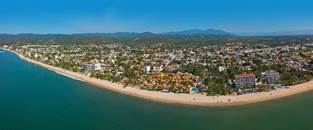
That’s why I try not to treat someone buying a home here as simply another transaction. For many people, the property represents something much larger: retirement, freedom, a fresh start, more time outdoors, winters without snow, a place where the kids and grandchildren can visit, or simply the realization that the life you’ve been postponing doesn’t necessarily have to wait.
If you’re wondering whether this community might suit you, a Canadian’s guide to living in Bucerías or retiring in Bucerías: what Canadians should know is a better place to start than simply looking at listing prices.
When you’re ready to see what the market actually looks like, you can move from research to a Bucerías property search.
So, Can Canadians Buy Property in Mexico?
Absolutely.
Canadians can legally acquire residential property in Mexico. In coastal areas such as Bucerías, Nuevo Nayarit, La Cruz de Huanacaxtle, Punta de Mita, Sayulita and Puerto Vallarta, foreign purchasers generally use a fideicomiso because these communities are located within Mexico’s constitutionally defined Restricted Zone.
The fideicomiso is an established legal mechanism through which foreign beneficiaries can use and enjoy residential property within that zone.
But knowing that you can buy property is only the beginning.
The more important questions are what you should buy, where you should buy, what documentation should be reviewed, what the property will actually cost you, what restrictions apply and whether the property fits the life you want to live.
And finally:
Do you understand the transaction well enough to be comfortable moving forward?
If the answer to that last question is no, keep asking questions.
A good real estate professional shouldn’t be bothered by them. They should welcome them.
Thinking About Buying Real Estate in Bucerías?
If you’re considering purchasing a home or condo in Bucerías or elsewhere around Banderas Bay, my suggestion isn’t to start by making an offer.
Start by having a conversation.
Tell me what you’re trying to accomplish, what concerns you about buying in Mexico and whether you’re six weeks away from purchasing or simply wondering whether retiring here five years from now is realistic.
We can work forward from there.
My job isn’t to convince you that every property in Mexico is a good investment or that every Canadian should move to Bucerías. My job is to help you understand the market, find properties that actually fit what you’re looking for, ask the right questions and help you navigate a transaction that may initially feel unfamiliar.
I’ve sat on both sides of that conversation. I spent years in the Canadian real estate business, and then Angela and I became the people wondering whether we could actually build a life in Mexico.
We did.
Today, Bucerías is home.
If you’re starting to wonder whether it could become home for you too, contact Dream Big In Mexico Real Estate and let’s have a conversation about what you’re looking for.
Or, if you’re still in the research stage, simply search Bucerías real estate for sale and start getting a feel for what’s available.
Jim McKinnon
Dream Big In Mexico Real Estate
Bucerías, Nayarit, Mexico
This article provides general educational information about purchasing real estate in Mexico and should not be considered legal, tax, immigration or financial advice. Mexican laws, government fees, tax rules and administrative procedures can change. Buyers should obtain advice from appropriately qualified professionals regarding their specific transaction.